How to reclaim your garage using overhead storage, wall systems, smarter zoning, and real-world decluttering strategies
Most garages don’t lack space … they lack a system. The right mix of overhead storage, wall systems, and zoning can dramatically increase usable space without expanding your footprint.
11 Practical Ways to Create More Space in Your Garage
How to Build a Garage Storage System That Actually Works Long-Term
Most garages don't have a space problem. They have a systems problem.
The average two-car garage offers somewhere between 400 and 600 square feet of floor space, plus an often-ignored volume of vertical space above it. And yet, the majority of American homeowners can't fit even one car inside. The reason isn't usually square footage. It's the absence of a coherent storage plan.
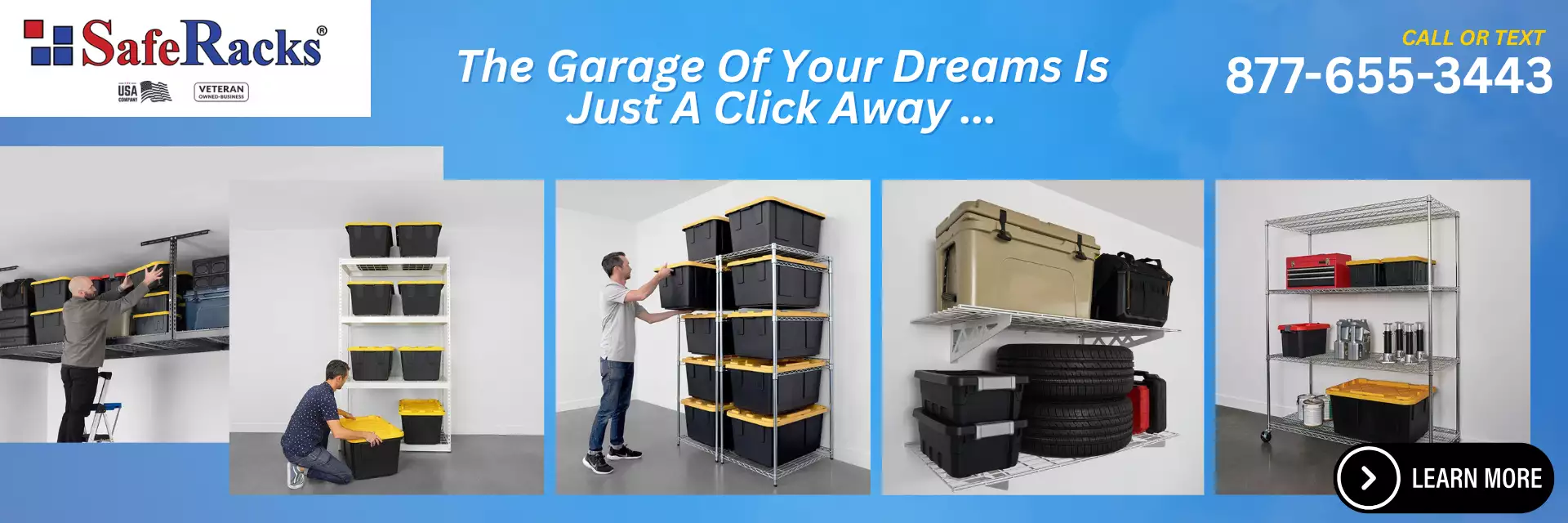
This guide covers the full range of garage organization solutions available to homeowners, from decluttering approaches that actually stick to wall systems, overhead racks, ceiling lifts, and everything in between. Along the way, you'll find honest assessments of what works, what doesn't, and what's right for your specific situation. Overhead storage systems like those made by SafeRacks (saferacks.com) represent one of the most effective ways to unlock underused space, but they're one piece of a larger puzzle. Here's how to see the whole picture.
Start Before You Buy Anything: The Declutter Phase
No storage system fixes a clutter problem. It just relocates it.
Before investing in racks, cabinets, or shelving, spend time sorting through what's actually in your garage. Most homeowners discover they're storing things they forgot they owned, duplicates of items they replaced, and seasonal gear they haven't touched in years.
A practical sorting method: pull everything out and divide it into four categories: keep, donate, sell, and trash. Be honest. A broken leaf blower isn't a "project." A set of skis you haven't used in a decade is a donation, not a storage challenge.
The goal isn't minimalism for its own sake. It's making sure the square footage and vertical space in your garage is occupied by things that actually belong there. Once you know what you're keeping, you can design a system around it, instead of designing a system around everything you've accumulated.
Understanding Your Garage Before You Organize It
Every garage has a different set of constraints. Before choosing storage solutions, take stock of yours.
Ceiling height matters enormously. An 8-foot ceiling gives you different options than a 10- or 12-foot ceiling. Overhead storage systems typically require at least 7 to 8 feet of clearance to function safely, with the rack itself mounted high enough to clear car rooflines and open doors.
Floor plan shapes how you zone and access storage. A single-car garage with a narrow footprint calls for different solutions than a three-bay garage with room to walk around.
Structural considerations apply especially to ceiling-mounted and wall-mounted systems. Storage racks and ceiling lifts must be anchored to joists, not just drywall. Knowing where your joists run and what they can hold is a prerequisite for safe installation.
What you're storing affects everything from shelf depth to weight rating to how frequently you need to access certain items. Seasonal decorations stored once a year are ideal candidates for overhead placement. Power tools you use weekly should stay reachable.
The Vertical Opportunity: Overhead Storage Systems
The most underused real estate in any garage is overhead. In a standard two-car garage, the ceiling zone above the car hoods, roughly the front third of the space, is often completely empty. Overhead storage systems convert that dead zone into usable square footage.
Steel overhead storage racks typically mount to ceiling joists and can hold between 400 and 600 pounds of gear. Quality systems like those from SafeRacks use 14-gauge steel and offer adjustable height settings so the rack can be positioned to clear your specific vehicles while still leaving useful headroom above. A single 4x8-foot rack can hold approximately 120 cubic feet of storage, roughly the equivalent of two large closets.
What works well overhead: Seasonal items (holiday decorations, camping gear, luggage), bulky but lightweight items (sleeping bags, foam mats, pool toys), and anything you access a few times a year rather than weekly.
Limitations to understand: Overhead storage requires safe, clear-headed access, typically a sturdy ladder. It's not ideal for frequently used items or anything heavy and awkward to maneuver above your head. Weight limits must be respected, and installation should always be anchored to structural joists, never just drywall or OSB.
For homeowners who aren't comfortable with DIY installation, professional installation services are available in most major metro areas, an important option given the safety stakes of ceiling-mounted systems.
Wall-Mounted Storage: The Most Flexible Layer
Wall space is the most versatile storage real estate in a garage because it's accessible at eye level and adaptable to almost any category of gear.
Slatwall panels are among the most popular wall storage solutions. They accept a wide variety of hooks, bins, and shelves that can be repositioned without drilling new holes. If your storage needs shift season to season, sports equipment in summer and holiday bins in winter, slatwall adapts easily.
French cleat systems work on a similar principle, using interlocking angled rails to support customizable hook and shelf arrangements. French cleats are particularly popular in woodworking shops and tool-heavy garages because they can support significant weight and allow for highly specific tool organization.
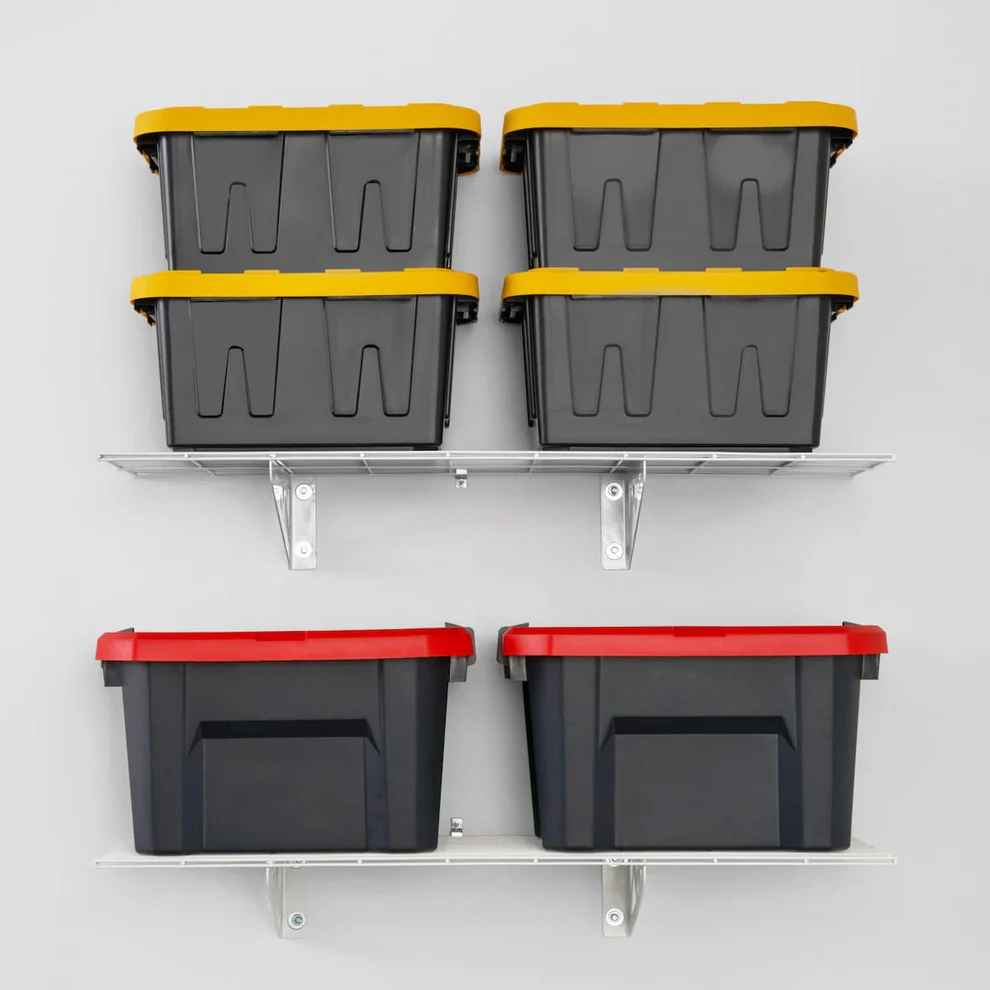
Fixed wall-mounted shelving is more rigid than slatwall but often stronger and cheaper per square foot of storage. Open wire shelving is easy to see through and doesn't collect dust. Wood shelving is sturdy and easy to build custom, though it requires more finishing work to withstand garage humidity.
Pros of wall-mounted systems: Accessible, adaptable, relatively affordable, and they keep floors clear.
Cons: They consume wall space that might otherwise be needed for maneuvering, and in garages with windows, doors, or utility panels on every wall, the available footprint shrinks quickly.
Pegboards and Tool Organization Systems
Pegboards remain one of the most cost-effective and practical solutions for tool organization, especially in garages that double as workshops.
A 4x8-foot pegboard panel can hold dozens of hand tools, including hammers, wrenches, pliers, and screwdrivers, in a visible, grab-and-go layout. The visual nature of pegboard is itself a feature: you can see at a glance what's missing, which encourages tools to get put back where they belong.
For heavier tools and power equipment, consider combining pegboard with dedicated hooks rated for weight, or transitioning to a French cleat or slatwall system that can support more load per anchor point.
Tool chests on wheels are worth considering alongside wall systems. A quality rolling toolbox keeps frequently used tools mobile and accessible, and can be rolled to wherever you're working rather than walking back and forth to a wall.
Freestanding Shelving Units
Freestanding metal shelving is the workhorse of garage storage: unglamorous but highly practical. Units with adjustable shelves and steel construction can hold substantial weight and are easy to reposition as your needs change.
These work especially well along the back wall of a garage or in corners where anchoring to wall studs isn't convenient. They're also a good first step for homeowners who aren't ready to commit to a permanent wall system.
Key specs to evaluate: Shelf weight rating (per shelf, not total unit), shelf depth (deeper isn't always better … 18 to 24 inches is the sweet spot for most garages), and overall unit stability. Freestanding shelving should always be anchored to a wall stud as a safety precaution, especially if children are present.
Limitations: Freestanding shelving consumes floor space, which is the scarcest resource in most garages. It also tends to collect clutter on and around it more easily than wall-mounted or overhead systems.
Cabinets: When Enclosed Storage Makes Sense
Open shelving is fine for gear you don't mind looking at. Chemicals, paints, motor oil, and sharp tools are a different story. Those belong in enclosed cabinets.
Garage-rated steel cabinets are built to handle humidity, temperature swings, and heavier contents than kitchen or office cabinetry. Locking cabinets are worth the upgrade if you have chemicals or tools you want secured from children.
Modular cabinet systems allow you to combine base cabinets, wall cabinets, and tall cabinets into a configured layout that fits your wall dimensions. Some systems include integrated workbenches, which solves two problems at once.
Honest trade-off: Cabinets are the most expensive per-square-foot storage option in the garage. They make sense for clean, finished garages where aesthetics matter and where you're storing items that genuinely benefit from enclosed protection. For pure storage density at lower cost, open systems win.
Ceiling Lifts, Pulley Systems, and Specialty Storage
Not all vertical storage belongs to overhead racks. For specific categories of gear, dedicated ceiling-mounted systems make more sense.
Bike hoists use a pulley-and-cleat system to raise bicycles to ceiling level. A single bike hoist typically holds one bike and costs relatively little to install. For families with multiple bikes, a wall-mounted bike rack, either horizontal or vertical, is often a more practical solution.
Kayak and canoe storage presents a unique challenge given the length and awkwardness of the equipment. Ceiling-mounted cradle systems hold kayaks horizontally overhead, clearing the floor while keeping boats protected. Freestanding J-rack systems are a lower-cost alternative that leans against a wall.
Platform lifts are motorized systems capable of raising heavier items, such as motorcycles, ATVs, and large equipment, to ceiling level for storage. They're a specialty solution, expensive and requiring significant ceiling height, but genuinely effective for the right use case.
For all ceiling-mounted systems beyond standard overhead racks, professional assessment is recommended before installation. The weight ratings, joist requirements, and mechanical components vary significantly by product and application.
Zoning Your Garage: The Strategy That Ties It All Together
Individual storage solutions work best when they're part of a deliberate spatial plan. Zoning means organizing your garage into functional areas based on how you actually use the space.
A practical zoning framework for most garages:
Zoning works because it assigns a purpose to every part of your garage. When everything has a designated area, it's easier to put things away and to notice when the system is breaking down.
Quick-Reference: Garage Storage Solutions at a Glance
|
Solution |
Best For |
Key Limitation |
|
Overhead ceiling racks |
Seasonal/bulky items |
Ladder access required |
|
Wall slatwall/French cleats |
Tools, gear, frequent access |
Limited by wall availability |
|
Pegboard |
Hand tools, hardware |
Weight limits per hook |
|
Freestanding shelving |
Flexibility, lower cost |
Uses floor space |
|
Enclosed cabinets |
Hazardous materials, aesthetics |
Higher cost |
|
Bike hoists |
Single or few bikes |
Per-unit installation |
|
Kayak/canoe cradles |
Large watercraft |
Ceiling height required |
|
Fold-down workbench |
Occasional workspace |
Not suitable for heavy continuous use |
Putting It Together: There's No Single Right Answer
The garages that work best are almost always the ones that layer solutions: overhead racks for seasonal bulk, wall systems for tools and sporting equipment, enclosed cabinets for hazardous materials, and a zoned floor plan that protects vehicle parking.
No single product category solves a garage. A set of beautiful cabinets won't help if the ceiling is holding nothing. Overhead racks won't help if the floor is still overwhelmed with gear that needs better categorization.
The sequence matters too: declutter first, then plan zones, then choose storage solutions to serve each zone. Buying storage before you've sorted what you're keeping is one of the most common mistakes homeowners make, and one of the most expensive.
For homeowners looking to start with the solution that returns the most new space per dollar, overhead ceiling racks are consistently among the strongest choices. Systems like SafeRacks, with adjustable height, high weight capacity, and professional installation available in 40-plus cities, are built specifically for this: turning the empty ceiling zone above your cars into 100-plus cubic feet of usable storage without touching a single square foot of floor.
But the ceiling is just one layer. Build the full system, and you'll have a garage that actually works, not just one that looks organized until the next rainy weekend.